Forehead lines often become most noticeable during ordinary expressions: raising your eyebrows in conversation, reacting to a surprise, or concentrating at work. Botox for forehead wrinkles can soften these expression lines without surgery, but the best result is not simply a smoother forehead. It is a natural-looking result that respects your facial movement, brow position, and individual goals.
At Bissan Medical Centre, aesthetic treatment is approached as a medical service, beginning with an assessment by a qualified clinician rather than a one-size-fits-all plan. Understanding what causes forehead wrinkles and what treatment can realistically do helps you make a comfortable, informed decision.
Botox is a brand name commonly used to describe botulinum toxin type A treatments. In carefully selected doses, it temporarily relaxes targeted muscles. For forehead lines, treatment usually focuses on the frontalis muscle, which lifts the eyebrows and creates horizontal lines across the forehead when it contracts.
These are known as dynamic wrinkles because they appear or deepen with movement. When the muscle is relaxed, the skin above it has less repetitive folding, so lines may look softer. Many people notice that their forehead appears more rested while still retaining some natural expression.
Botox does not fill a crease in the way a dermal filler can. If lines remain visible when your face is completely at rest, they may be more established static lines. Botox can still improve their appearance by reducing repeated movement, but it may not erase them entirely. The degree of improvement depends on skin quality, the depth of the lines, sun exposure, smoking history, and the way your facial muscles work.
The forehead is not an area to treat by counting lines alone. The frontalis muscle helps lift the brows, and each person has a different natural brow position, muscle strength, and eyelid shape. A dose or injection pattern that works well for one person may create an undesired heavy-brow feeling in another.
A skilled consultation considers how you raise your brows, whether you already rely on forehead movement to keep your eyelids open, and whether lines between the eyebrows also contribute to your expression. In many cases, the forehead and frown lines are assessed together to create balanced movement. Treating only one area without considering the surrounding muscles can sometimes affect the final look.
This is why it is helpful to describe the result you want in practical terms. You may want softer lines while preserving movement, a more relaxed appearance in photos, or prevention of deeper creases over time. There is no universal ideal. A conservative plan can be adjusted at a follow-up visit if appropriate, while excessive treatment may take time to wear off.
Adults bothered by horizontal forehead lines that become more visible with facial expressions may be suitable candidates. Treatment may also appeal to people who want a nonsurgical option with little downtime. Good candidates generally have realistic expectations, understand that results are temporary, and are willing to have treatment performed by a qualified medical professional.
A consultation is especially important if you have naturally low brows, hooded eyelids, a history of eyelid drooping, facial asymmetry, prior facial surgery, or neuromuscular conditions. Tell your clinician about all medications, supplements, allergies, and previous aesthetic treatments.
Botulinum toxin treatment is generally avoided during pregnancy and breastfeeding because safety data are limited. It may also be unsuitable for people with an infection or irritation at the intended injection site, certain neurological or muscle disorders, or a known allergy to ingredients in the product. Your clinician can advise whether postponing treatment or considering another approach is more appropriate.
A forehead wrinkle consultation begins with a discussion of your medical history and desired outcome. The clinician will observe your face at rest and while you raise your eyebrows, frown, and relax. This movement assessment guides the treatment plan far more reliably than a standard injection map.
If treatment is appropriate, the skin is cleaned and a series of small injections is placed in selected points across the forehead. Most appointments are relatively brief. People often describe the sensation as a quick pinprick or mild sting. Topical numbing is not always necessary, though comfort options can be discussed.
Small red marks, swelling at the injection points, tenderness, or bruising can occur afterward. These effects are usually mild and temporary, but bruising may last longer for some people. If you take blood-thinning medication or supplements, do not stop them on your own. Ask the prescribing clinician and your aesthetic provider for guidance before your appointment.
Forehead movement does not stop immediately after treatment. Early changes are commonly noticed within several days, while the full effect often develops over about one to two weeks. Your clinician may recommend a review after this period if an assessment or small adjustment is needed.
Results vary, but many patients find that the effect lasts around three to four months. Muscle activity gradually returns, so repeat treatment is needed to maintain the result. Some people may notice their lines return sooner or later than this range due to metabolism, muscle strength, treatment dose, and individual response.
Regular treatment can help reduce the repeated folding that contributes to dynamic lines. However, it should not be viewed as a permanent solution or a substitute for daily skin care. Sunscreen, gentle cleansing, moisturizer, and appropriate treatment for pigmentation or texture can all support a healthier-looking forehead over time.
Your clinician will provide aftercare advice specific to your treatment. In general, avoid rubbing, massaging, or applying strong pressure to the treated area immediately afterward. It is also sensible to avoid strenuous exercise, heat exposure, and activities that place pressure on the forehead for the period recommended by your provider.
You can usually return to many normal activities the same day. Plan treatment thoughtfully if you have an important event, professional photographs, or travel coming up, especially if you are receiving injections for the first time. Allow enough time for results to develop and for any minor redness or bruising to settle.
Avoid judging the result too early. Forehead muscles can respond unevenly during the first few days before the final effect develops. Contact your provider rather than trying to correct an early concern elsewhere.
When administered by an experienced medical professional, Botox is widely used for cosmetic purposes. Still, every injectable treatment carries potential risks. Common temporary effects include injection-site redness, minor swelling, tenderness, headache, or bruising.
Less common effects can include asymmetry, an overly smooth or overly restricted appearance, temporary brow heaviness, or eyelid drooping. These outcomes are usually temporary but can be frustrating, which is another reason careful assessment and conservative dosing matter.
Seek medical advice promptly if you experience symptoms that concern you, particularly difficulty swallowing, speaking, breathing, significant muscle weakness, or signs of an allergic reaction. Although serious reactions are uncommon in cosmetic use, they require urgent medical attention.
Before choosing treatment, ask who will perform the injections and what training and experience they have with upper-face anatomy. You can also ask how your brow position and natural movement will be assessed, what result is realistic for your current lines, and what the plan would be if you need a follow-up review.
It is reasonable to ask about the product being used, expected duration, possible side effects, and the total cost of the treatment plan. A responsible provider will not promise perfection or pressure you to treat areas you did not ask about. You should feel heard, informed, and able to take time to decide.
Forehead lines are a normal part of an expressive face. If they no longer reflect how rested or confident you feel, a specialist consultation can help you explore Botox for forehead wrinkles with clear expectations, thoughtful planning, and care that keeps your comfort first.
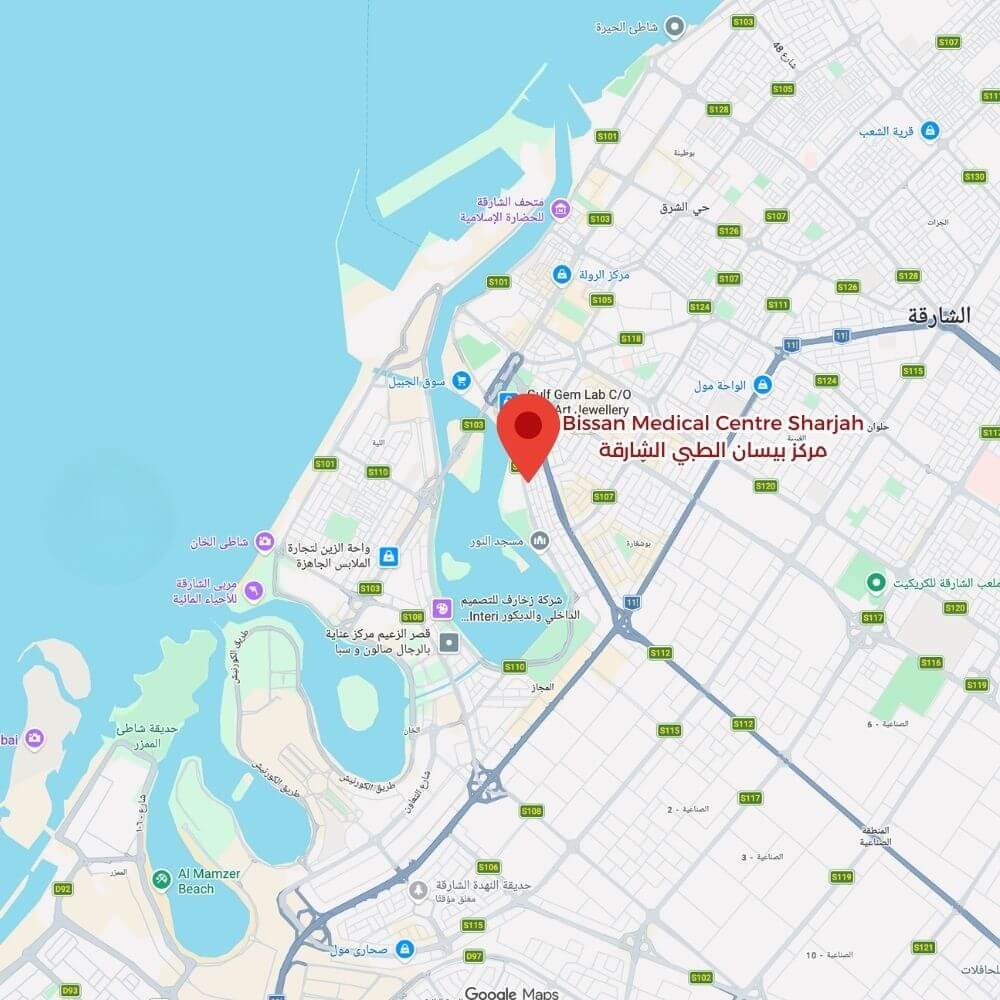
Bissan Medical Centre in Sharjah, Al Majaz 1, provides healthcare services across multiple specialties. To contact us, call +971 (6) 573 7005 | WhatsApp +971 (50) 633 7121 | Email hello@bissanmedical.com.
MOH Approval No. 6MYAJ092-250925